
Does CBD Oil Change Urine Colour?
Ever wondered, “Does CBD oil change urine colour?” If you have, you’re not alone. Many of us associate lifestyle changes or supplements with visible signs in the body—and your pee is no exception. CBD oil is popping up everywhere, and you might be asking yourself if that little drop under your tongue is behind any weird toilet surprises. Let’s walk through this together, side by side—no medical jargon, just plain talk.
Estimated reading time: 10 Minuten
- 1. What Determines Urine Colour?
- 2. How CBD Oil Interacts with the Body
- 3. Does CBD Oil Itself Dye Your Urine?
- 4. Does Hydration Influence Urine Colour?
- 5. Could Components in CBD Oil Affect Colour?
- 6. Role of CBD Carrier Oils (MCT, Hemp Seed, Olive)
- 7. CBD Oil and Liver Metabolism
- 8. Other Possible Causes of Urine Colour Changes
- 9. When to Worry: Warning Signs
- 10. Anecdotes and Real-World Experiences
- 11. Simple Tips to Monitor Your Urine Colour
- 12. How to Speak with Your Doctor About This
- 13. Summary: The Big Picture
- 14. What You Can Do Next
- Conclusion
- Frequently Asked Questions
- The Real CBD Shop
1. What Determines Urine Colour?
Urine colour comes down to a yellow pigment called urochrome—it’s what gives pee its yellow hue. Think of it like mixing paint: depending on how much water is in the mix, the yellow pigment becomes stronger or lighter. More water. Lighter yellow. Less water? Deeper gold. Also, some foods, vitamins, or medications can change it up—like beet juice turning urine pink or B-vitamins making it neon yellow.
2. How CBD Oil Interacts with the Body
When you take CBD oil, your body breaks it down—mainly in the liver—and eventually flushes out the by-products through urine or stool. It travels through your system like a delivery truck, dropping off cargo (CBD, cannabinoids) and producing by-products that need to be disposed of.
3. Does CBD Oil Itself Dye Your Urine?
In short — no, CBD oil doesn’t directly change the colour of your urine.
CBD oil doesn’t contain strong pigments or dyes that would “paint” your pee a different colour. Most high-quality CBD oils are made from natural plant extracts and a carrier oil (like hemp seed, MCT, or olive oil). While these oils may have a slight tint — pale yellow, golden, or greenish — your body processes and breaks them down before anything reaches your bladder.
It’s a bit like adding a single drop of weak tea to a full glass of water — once it’s diluted, you can hardly see a difference.
If your urine colour changes after starting CBD oil, chances are it’s because of hydration levels, food, supplements, or other lifestyle factors — not the CBD oil itself.
4. Does Hydration Influence Urine Colour?
Absolutely — hydration is the number one factor that affects urine colour.
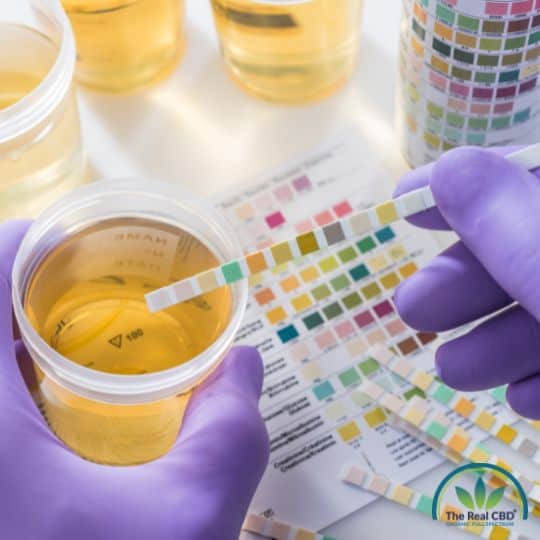
Your urine gets its yellow shade from a natural pigment called urochrome. The more water you drink, the more diluted that pigment becomes — making your urine a pale, straw-like colour. When you’re not drinking enough water, the pigment becomes more concentrated, and your urine turns darker yellow or even amber.
Think of it like squash or cordial:
- More water = light, see-through drink (pale urine).
- Less water = strong, rich colour (dark urine).
So, if you notice your pee changing colour while taking CBD oil, it’s worth asking: Am I drinking enough water? Often, the answer is more about your water bottle than your CBD bottle.
Urine Colour Chart – What Your Pee Might Be Telling You
| Colour | Possible Meaning | What to Do |
| Clear / Very Pale Yellow | Well-hydrated (or possibly over-hydrated) | You’re drinking plenty of water. If it’s always clear, you might be drinking more than your body needs. |
| Pale Yellow / Straw | Healthy hydration level | Keep doing what you’re doing — you’re in the sweet spot. |
| Bright Yellow | Often caused by vitamins (especially B-complex) | Nothing to worry about if you’ve taken supplements recently. |
| Dark Yellow / Amber | Mild dehydration | Drink a glass of water and keep an eye on it. |
| Honey or Brownish | Could be severe dehydration or liver/bile duct issues | Rehydrate immediately. If it stays brownish, see a doctor. |
| Pink or Red | Could be from foods (beets, berries) or blood in urine | If not caused by food, seek medical advice promptly. |
| Orange | Could be dehydration, certain medications, or liver/bile issues | Drink more water. If it persists, check with a healthcare provider. |
| Blue or Green | Rare — from certain meds, food dyes, or infections | Unusual colours should be discussed with a doctor, especially if unexpected. |
| Cloudy or Milky | Possible urinary tract infection (UTI) or kidney issues | See a doctor, especially if paired with pain or odour. |
5. Could Components in CBD Oil Affect Colour?
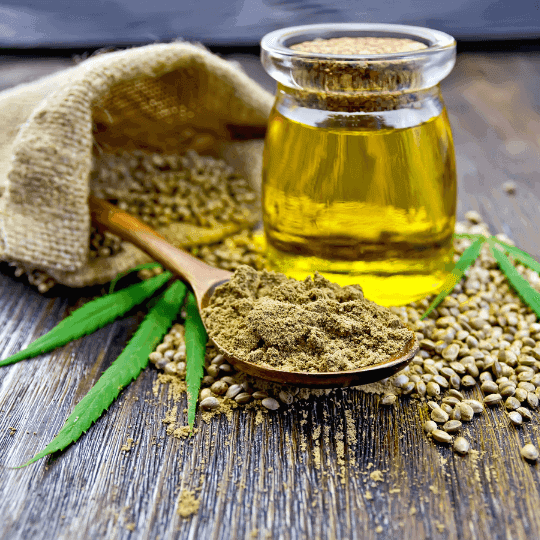
Some carrier oils (like hemp seed, MCT, olive) might carry their own faint tints—think light yellow to amber—but they’re typically too diluted to make your pee look different. It’s a lot like adding a drop of pale tea to a glass of water—barely noticeable.
6. Role of CBD Carrier Oils (MCT, Hemp Seed, Olive)
- Hemp Seed Oil – faintly greenish-gold.
- MCT Oil (made from coconut) – clear to very pale.
- Olive Oil – pale yellowish.
In all cases, by the time they’re in your system and excreted, the visual impact is minimal or non-existent.
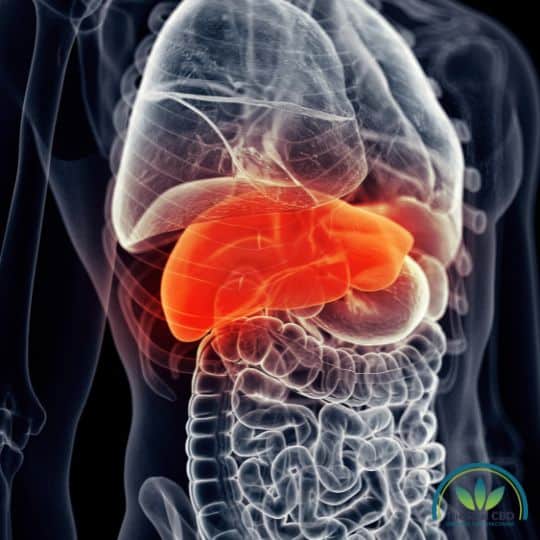
7. CBD Oil and Liver Metabolism
When you take CBD oil — whether under your tongue, in a capsule, or even in your coffee — it doesn’t just float around your body unchanged. It has to go through your liver’s “processing plant” first.
Think of your liver as the ultimate customs officer. Everything you swallow has to be checked, broken down, and approved before it’s sent on to the rest of your body. CBD is no different.
Here’s the step-by-step
- Absorption – CBD enters your bloodstream through the digestive system (or directly via blood vessels under the tongue).
- First-pass metabolism – The liver gets first dibs at processing it.
- Breakdown – Special enzymes (mainly from a group called CYP450) break CBD into smaller compounds (metabolites).
- Distribution – These metabolites, along with any CBD that’s still active, travel through your body to interact with your endocannabinoid system.
- Excretion – Eventually, the liver sends leftover bits out of the body via urine or stool.
Why this matters:
- The liver decides how much CBD your body can actually use (this is called “bioavailability”).
- CBD can temporarily interact with the liver enzymes that process other substances — meaning it can change how quickly some medicines are broken down.
- This process doesn’t make CBD oil change urine colour — the byproducts are usually colourless.
8. Other Possible Causes of Urine Colour Changes
Here are some usual suspects beyond CBD:
- Foods: Beets (pink), asparagus (greenish tint), berries (dark red).
- Vitamins & Supplements: Vitamin B2 (riboflavin) can make pee neon yellow.
- Medications: Some antibiotics, laxatives, or treatments do change colour.
- Dehydration: Concentrates the urochrome pigment.
- Health issues: Rarely, liver or kidney issues, or blood in urine, can muddy the hue.
Related content
9. When to Worry: Warning Signs

Most of the time, a change in urine colour is harmless — maybe you ate a beet salad, took a vitamin, or just forgot to drink enough water. But sometimes, it’s your body’s way of waving a little warning flag.
You should pay closer attention if:
- Your urine is dark brown or tea-coloured and it stays that way even when you’re well-hydrated. This can sometimes signal liver issues.
- It’s red, pink, or rusty-coloured and you haven’t eaten anything that would cause it (like beetroot or blackberries). This could be a sign of blood in the urine.
- It’s cloudy or milky along with a strong smell — this may point to an infection.
- You also notice symptoms like pain, burning, fever, nausea, or swelling in your body.
Rule of thumb:
If the colour change lasts more than a day or two and you can’t link it to food, supplements, or dehydration — check in with a healthcare professional. It’s always better to get peace of mind than to wonder and worry.
10. Anecdotes and Real-World Experiences
Some folks say CBD oil made their pee darker—but guess what? Most were dehydrated, taking vitamins, or had just eaten a turmeric-rich smoothie. Often it’s like blaming the spoon for stirring the tea—when really, it’s the tea!
11. Simple Tips to Monitor Your Urine Colour
- Keep a daily hydration log: track water intake and note urine colour.
- Use a colour chart (often next to public water fountains)—stay in the pale straw to light yellow range.
- Note new foods or supplements on days the colour changes.
12. How to Speak with Your Doctor About This

Keep it light and clear. Something like:
“Hi Dr. Smith—lately, I’ve been using CBD oil. I noticed my urine seems a bit darker (or lighter). Could it be the CBD or something else? I’ve been drinking about ___ liters/day. Thanks for looking into it!”
13. Summary: The Big Picture
- CBD oil does not directly change urine colour—it lacks dyes or strong pigments.
- Hydration and other substances (food, vitamins, meds) play a much bigger role.
- If your urine does change colour, take note of everything you’re consuming—CBD oil might just be an innocent bystander.
14. What You Can Do Next
- Drink enough water (let your urine be light like lemonade).
- Track any changes with a simple chart or journal.
- Rule out other causes—especially new foods or supplements.
- If your pee stays odd for days, check with a healthcare provider—just in case.
Conclusion
So, does CBD oil change urine colour? The honest answer: not directly. Your hydration level and what else you’re taking are way more influential. Think of CBD oil as a friendly guest—not a paintbrush. If your pee seems off, keep an eye, stay hydrated, and trust your body—and if in doubt, check in with a healthcare pro.
Frequently Asked Questions
No—CBD oil itself doesn’t contain pigments that affect urine colour. What you eat, drink, or your hydration matters more.
It was probably due to supplements like B-vitamins (common in wellness routines), not the CBD oil. Vitamins like B2 are known culprits.
Absolutely. Dehydration concentrates your urine’s pigment, making it darker—so hydration status is key, not the CBD.
Not really. Carrier oils like hemp seed, MCT, or olive add barely detectable tint and are metabolized before excretion.
If you see persistent dark, red, or brown urine not linked to food, supplements, or hydration—and especially if you have symptoms like pain or fatigue—reach out to a medical professional.
The Real CBD Shop

I am a certified expert in Medicinal Cannabis. We are all about giving correct and trustworthy information. We know how important it is to learn about CBD and cannabis, which is why we want to be your go-to source for trustworthy information. We help you improve your health by using our knowledge and experience as a starting point.











Leave a Reply
Want to join the discussion?Feel free to contribute!