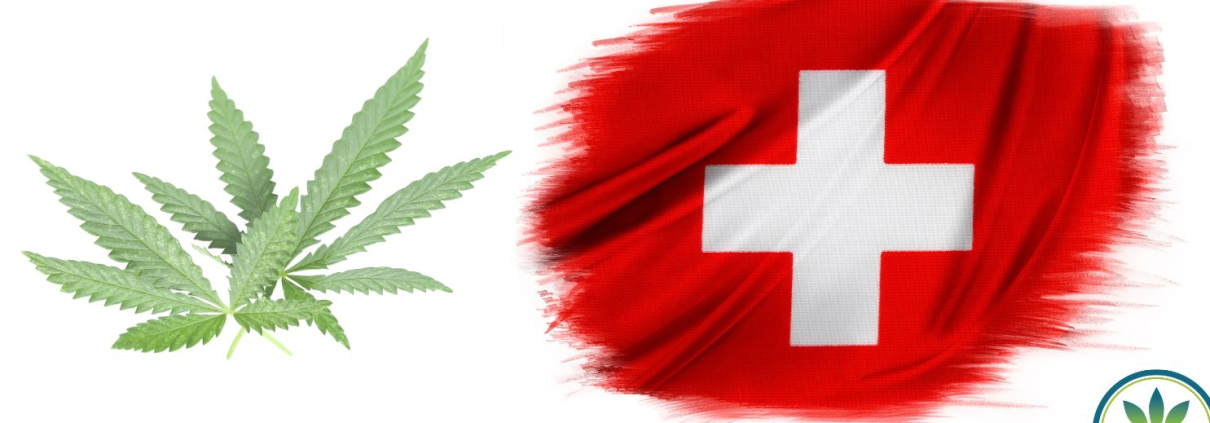
Schweiz is often called a pioneer in the European CBD market. Unlike most EU countries, Switzerland has a much higher THC threshold, making it a hotspot for CBD production and exports. FAQ Is CBD oil legal in Switzerland in 2025? The answer is yes — and Switzerland is actually one of the most CBD-friendly countries in Europe.
Here’s everything you need to know about CBD laws in Switzerland.
FAQ about CBD laws in Switzerland.
Yes. CBD is fully legal in Switzerland as long as it contains less than 1% THC — far higher than the EU limit.
Yes. CBD oil is widely sold and legal as long as it stays under the 1% THC limit.
Yes. Tourists can purchase CBD legally from shops, pharmacies, and even kiosks in Switzerland.
The legal limit is 1% THC — making it one of the highest allowances in Europe.
No. CBD-Produkte are available without prescription. Only cannabis products with THC above 1% are classified as narcotics.
Yes, but travellers should be careful. If your product comes from an EU country, it must follow EU limits (0.2–0.3% THC). Products legal in Switzerland may not be legal to bring back home. Travelling with CBD in Europe
Yes. CBD flowers are very popular in Switzerland and are legally sold in shops if THC content is below 1%.
Yes, but they fall under Switzerland’s food safety regulations. CBD-Esswaren and drinks are available, but they must be approved as food products.
Yes. CBD vape liquids and cartridges are legal and widely available in Switzerland.
Yes. CBD is non-psychoactive and does not impair Fahren. However, products with higher THC (close to 1%) could, in rare cases, cause a positive drug test.
No. CBD is not considered a narcotic. Only cannabis products with more than 1% THC fall under narcotics law.
CBD products with less than 1% THC are available to all. Medical cannabis with higher THC levels is legal but only on prescription.
Yes. You must be 18 years or older to legally buy CBD-Produkte.
Pure CBD will not. But full-spectrum products containing up to 1% THC may cause positive results in sensitive drug tests.
Yes. Many Swiss companies sell CBD products online, but delivery outside Switzerland must comply with the laws of the receiving country.
Yes, but it must follow Swiss rules (under 1% THC). However, products from the EU may contain only 0.2–0.3% THC, so they are legal but weaker than local Swiss CBD.
Yes. CBD-Hautpflege, creams, and balms are legal if they comply with Swiss cosmetic regulations.
Yes. Licensed farmers and even individuals can grow hemp as long as it is an approved variety and contains under 1% THC.
Yes. The industry is regulated by Swiss authorities to ensure product quality, labelling, and compliance with the 1% THC limit.
Possibly. With cannabis legalisation discussions ongoing, Switzerland may further integrate CBD into a broader cannabis market framework
Final Thoughts on CBD Legality in Switzerland
To sum up, CBD is fully legal in Switzerland in 2025, with one of the most relaxed frameworks in Europe. Oils, flowers, edibles, cosmetics, and vape products are widely available, as long as they contain less than 1% THC.
Switzerland is not part of the EU, which allows it to set its own rules — and its higher THC threshold has helped make it a global leader in CBD production.
For both locals and tourists, Switzerland offers one of the most open and diverse CBD markets in Europe, making it a prime destination for CBD enthusiasts.
Thank you for reading our FAQ, Is CBD legal in Switzerland in 2025